Tesla Defers Optimus External Deliveries to Late 2027 Amid Persistent Hardware Hurdles
Tesla has pushed the launch of its humanoid robot for outside buyers to the end of 2027, citing unresolved challenges with hand mechanics and AI generalization that mirror industry-wide struggles.
By Eduardo Salazar ·
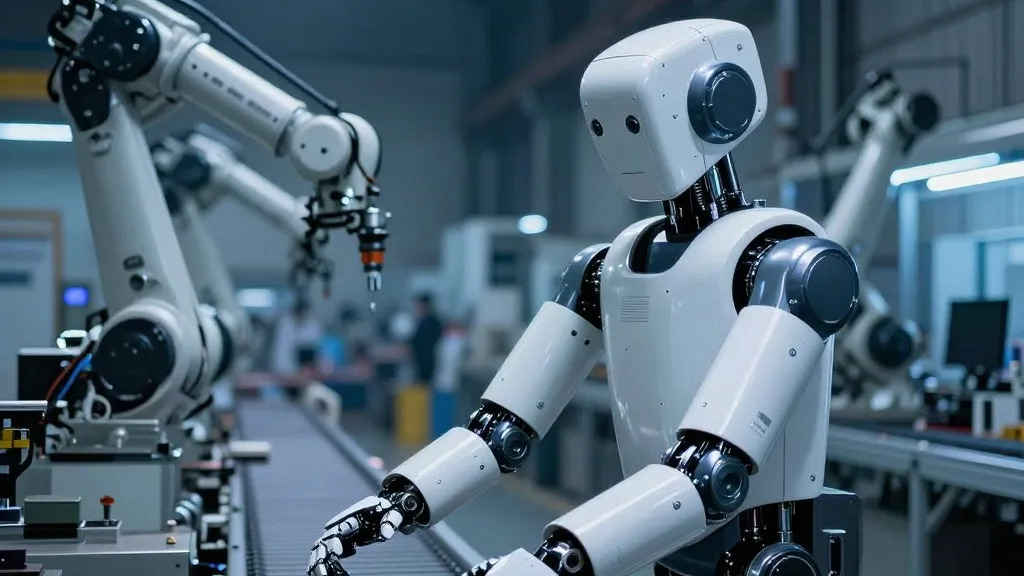
Tesla is now targeting the end of 2027 for the first external deliveries of its Optimus humanoid robot, a timeline that signals continued friction in bringing the machine from prototype to practical utility. On the company’s Q3 2026 earnings call, Elon Musk acknowledged that significant work remains in the robot’s hands, overall durability, and artificial intelligence capabilities. These three areas represent the core technical bottlenecks currently facing the entire humanoid robotics sector, raising questions about Tesla’s competitive advantage despite its scale.
According to Musk, Tesla has initiated early production of Optimus on its high-volume line in Fremont, California, the facility previously dedicated to Model S and Model X production. While much of the infrastructure designed to support a million-unit annual capacity is already installed, Musk noted that reaching a rate of roughly 20,000 units per week will take at least a year, potentially longer, as design elements continue to evolve. The company intends to focus initial external sales on industrial applications that involve dangerous, repetitive, or 24/7 tasks.
The primary hardware challenge identified by Tesla engineers is the robot’s hand. Musk explained that the fingers must be soft enough to manipulate delicate objects yet durable enough to withstand constant wear, a difficulty compounded by the fact that robots cannot self-repair like human skin. Alongside the hands, custom gears present ongoing reliability concerns. On the software front, Tesla lacks the vast data collection fleet available to its autonomous driving division, leading to a plan to build 10,000 to 20,000 robots for an "Optimus Academy" where they will practice tasks to refine their AI architecture. The AI5 chip is scheduled for integration around April 2027.
This delay follows a pattern of shifting timelines. In 2024, Musk projected internal use by 2025 and high-volume external sales by 2026. By January 2025, he claimed Tesla would build approximately 10,000 robots that year, with several thousand performing useful work, a goal he later admitted was not met. Tesla’s recent Q3 shareholder letter describes the current output as the company’s first "production-quality" bots, implying that previous units did not meet this standard. Analysts note that the hand and forearm assembly involves over 100 small parts, many of which are still assembled by hand, contributing to the complexity.
Musk asserted that no competitor is "even close" to Tesla in developing a general-purpose humanoid, a claim that contrasts with recent moves by rivals. XPeng activated an automated production line for its IRON robot in September, with 80% of core processes automated, and plans mass production by late 2026. Meanwhile, Boston Dynamics began producing its electric Atlas in January, with all 2026 deployments already committed, including to Google DeepMind. Boston Dynamics has also hired Milan Kovac, Tesla’s former head of Optimus, and has adopted a pragmatic approach to hands by prioritizing sturdy industrial grippers over human-like dexterity.
The discrepancy between Tesla’s competitive confidence and its rivals' progress leaves open questions about the true state of the market. While Tesla may be building more robots, the ability to generalize AI to unscripted tasks remains unsolved for all major players. Musk promised a video within a month or two showing Optimus performing non-pre-programmed tasks, but given the history of slipping deadlines, investors and observers remain cautious about whether late 2027 will finally hold.
Source: Electrek