Moon Landing Now Needs Twenty-Two Boosters
NASA's latest internal assessment suggests the Artemis program will require significantly more Starship launches than previously hoped.
By Emily Carter ·
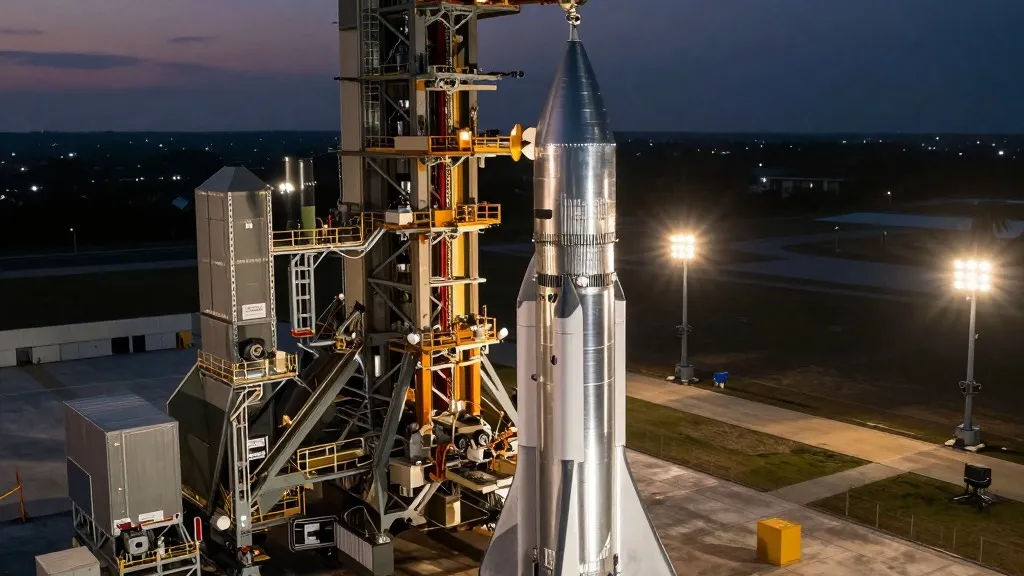
The financial and logistical architecture of NASA’s Artemis program is facing a significant stress test as the agency’s latest internal estimates reveal a steep increase in the required launch cadence. While the space agency has historically guarded its specific operational metrics with the discretion typically reserved for sensitive nuclear data, new figures indicate that the path to the lunar surface is becoming considerably more resource-intensive than earlier projections suggested.
The central tension revolves around the number of SpaceX Starship vehicles needed to assemble a fuel depot in low-Earth orbit. This depot must be fully loaded with liquid oxygen and methane to power a Starship-based lunar lander, enabling it to travel to the Moon, land, and return to lunar orbit. Previous guidance from NASA officials has been vague, with Human Landing System director Lisa Watson-Morgan stating in 2023 that the agency had a general idea but was reluctant to commit to an exact figure. She later narrowed the estimate to the "high single digits to the low double digits," implying roughly a dozen total launches, which would include one "depot" vehicle and eleven "tanker" vehicles.
However, recent disclosures suggest this number has climbed sharply. Some NASA officials have previously cited the "high teens" as a possibility, hoping that SpaceX would dramatically improve Starship’s lift capacity to reduce the tanker flight count. That hope appears to be fading. The latest estimate, shared during the NASA Aerospace Safety Advisory Panel’s quarterly meeting on Thursday, indicates that twenty-two launches are now considered necessary to support a crewed lunar landing.
This upward revision raises critical questions about the timeline for returning humans to the Moon this decade. Panel member Charlie Precourt, a former NASA astronaut, discussed the associated risks during the meeting. The shift from a dozen to twenty-two launches represents a substantial jump in operational complexity and cost. It suggests that the rapid improvement in vehicle payload capacity that NASA and SpaceX had anticipated may not materialize soon enough to keep the current decade-long target on track.
The market implications are clear: the Artemis program is becoming less of a sprint and more of a long-haul logistical operation. The reliance on a high volume of tanker flights means that the economic burden of propellant delivery to orbit will remain the dominant cost driver for the next several years. Investors and stakeholders in the commercial space sector must now price in this increased demand for launch services, as the margin for error in the Starship development timeline appears to have narrowed significantly.
Open questions remain regarding whether SpaceX can accelerate its Starship improvements to offset this new requirement. Until the agency provides further clarification on how this twenty-two-launch figure factors into the broader Artemis budget and schedule, the market will likely view the lunar landing as a riskier proposition than previously modeled. The gap between the desired timeline and the operational reality is widening, forcing a recalibration of expectations for both government spending and private sector performance.
Source: Ars Technica